Vegetable Growth Stages: How Long Each Crop Takes, Seed to Harvest
Radishes are ready in just 21–30 days and leaf lettuce in about 45–55; beans, peas, cucumbers and zucchini take around 45–70 days, carrots 60–80, corn and potatoes 70–120 and pumpkins 90–120; tomatoes and peppers, started indoors, need about 100–150 days from seed.
Seed to harvest times, fastest first
Typical times in good conditions — tap a vegetable for its full stage-by-stage guide.
| Vegetable | Sprouts in | Seed to harvest | Sow depth |
|---|---|---|---|
| RadishSow 1.2 cm (½ in) | 3–5 days | 21–30 days | 1.2 cm (½ in) |
| LettuceSow 3–6 mm (⅛–¼ in) | 2–10 days | 45–80 days | 3–6 mm (⅛–¼ in) |
| ZucchiniSow 2.5 cm (1 in) | 5–10 days | 45–60 days | 2.5 cm (1 in) |
| Green beanSow 2.5–4 cm (1–1½ in) | 7–10 days | 50–70 days | 2.5–4 cm (1–1½ in) |
| CucumberSow 1.2–2.5 cm (½–1 in) | 3–10 days | 50–70 days | 1.2–2.5 cm (½–1 in) |
| PeaSow 2.5–5 cm (1–2 in) | 7–14 days | 55–70 days | 2.5–5 cm (1–2 in) |
| CarrotSow 6 mm (¼ in) | 14–21 days | 60–80 days | 6 mm (¼ in) |
| CornSow 2.5–5 cm (1–2 in) | 7–10 days | 70–100 days | 2.5–5 cm (1–2 in) |
| PotatoSow 10 cm (4 in) | 2–4 weeks | 70–120 days | 10 cm (4 in) |
| PumpkinSow 2.5 cm (1 in) | 5–10 days | 90–120 days | 2.5 cm (1 in) |
| TomatoSow 6 mm (¼ in) | 5–10 days | 100–120 days | 6 mm (¼ in) |
| PepperSow 6 mm (¼ in) | 7–21 days | 120–150 days | 6 mm (¼ in) |
Printable growth stage infographics
One page per vegetable — open a guide to download its infographic.
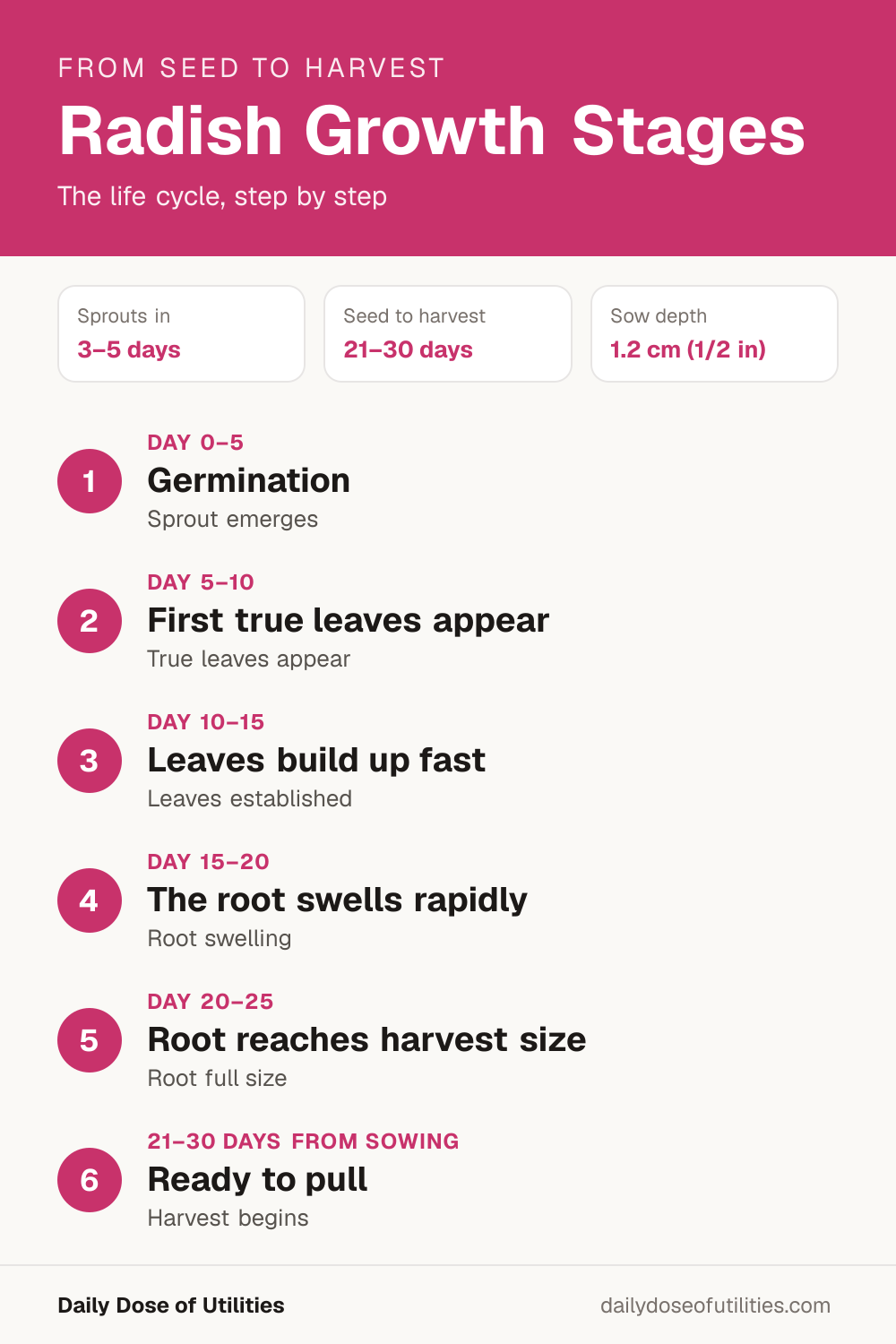
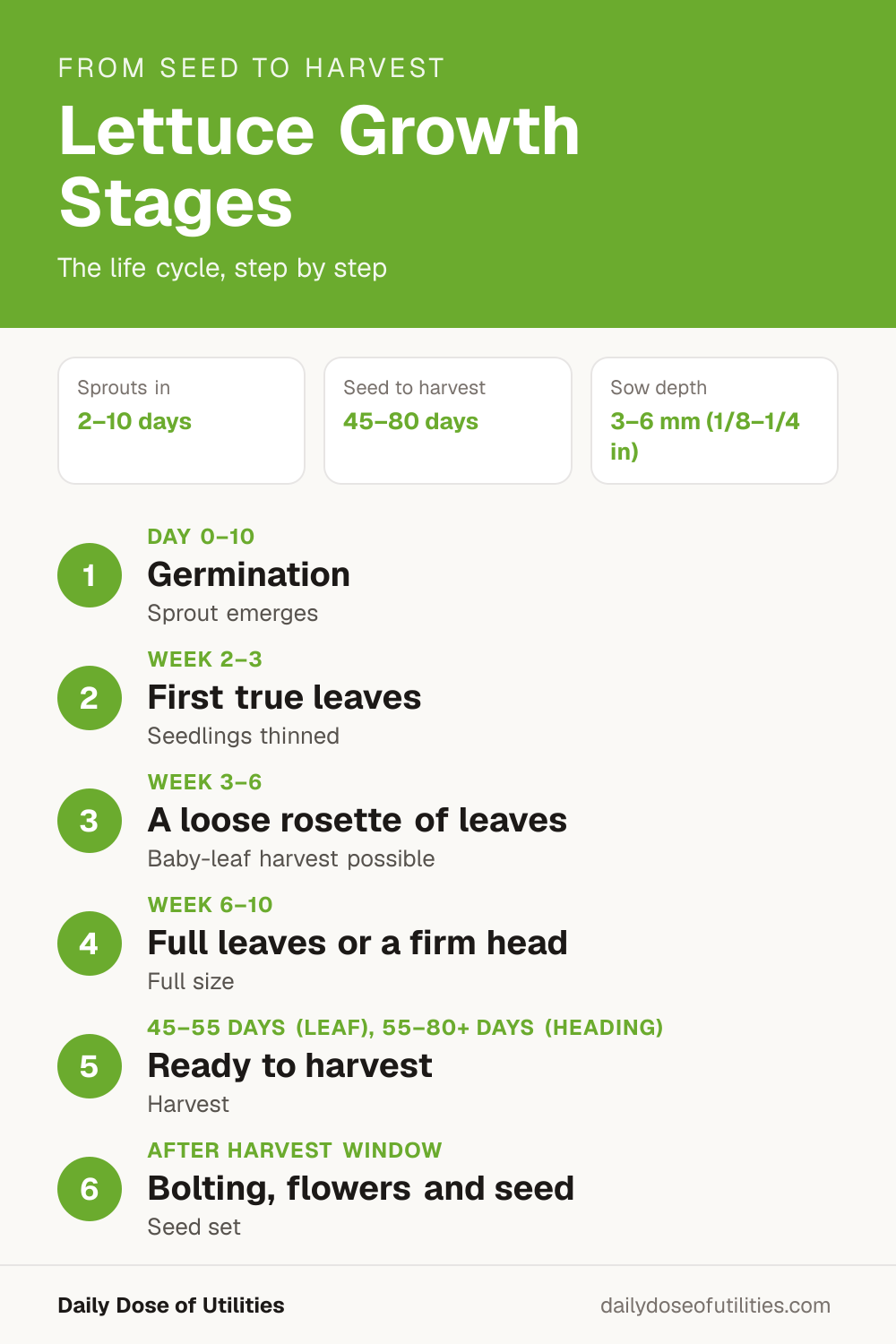
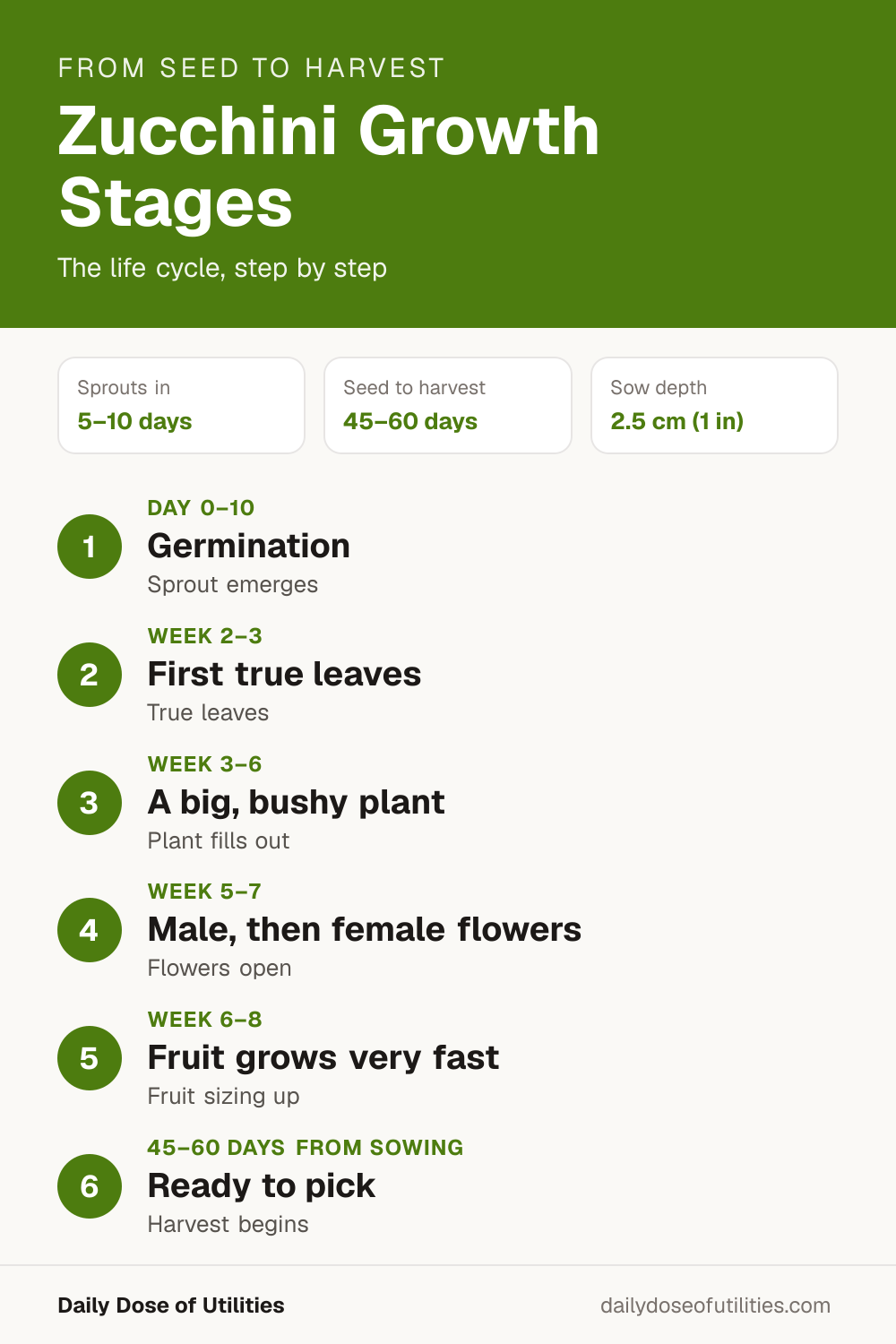
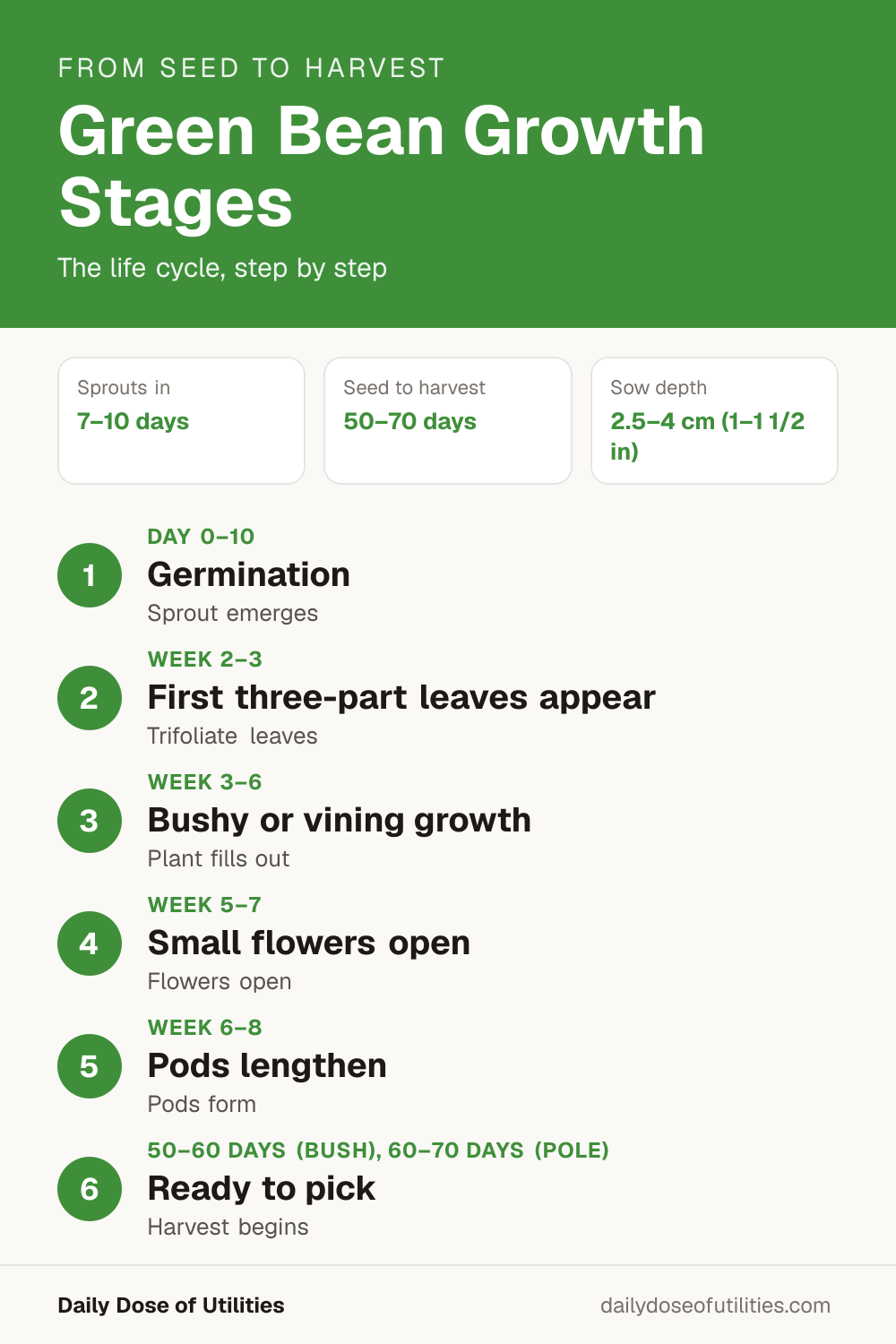
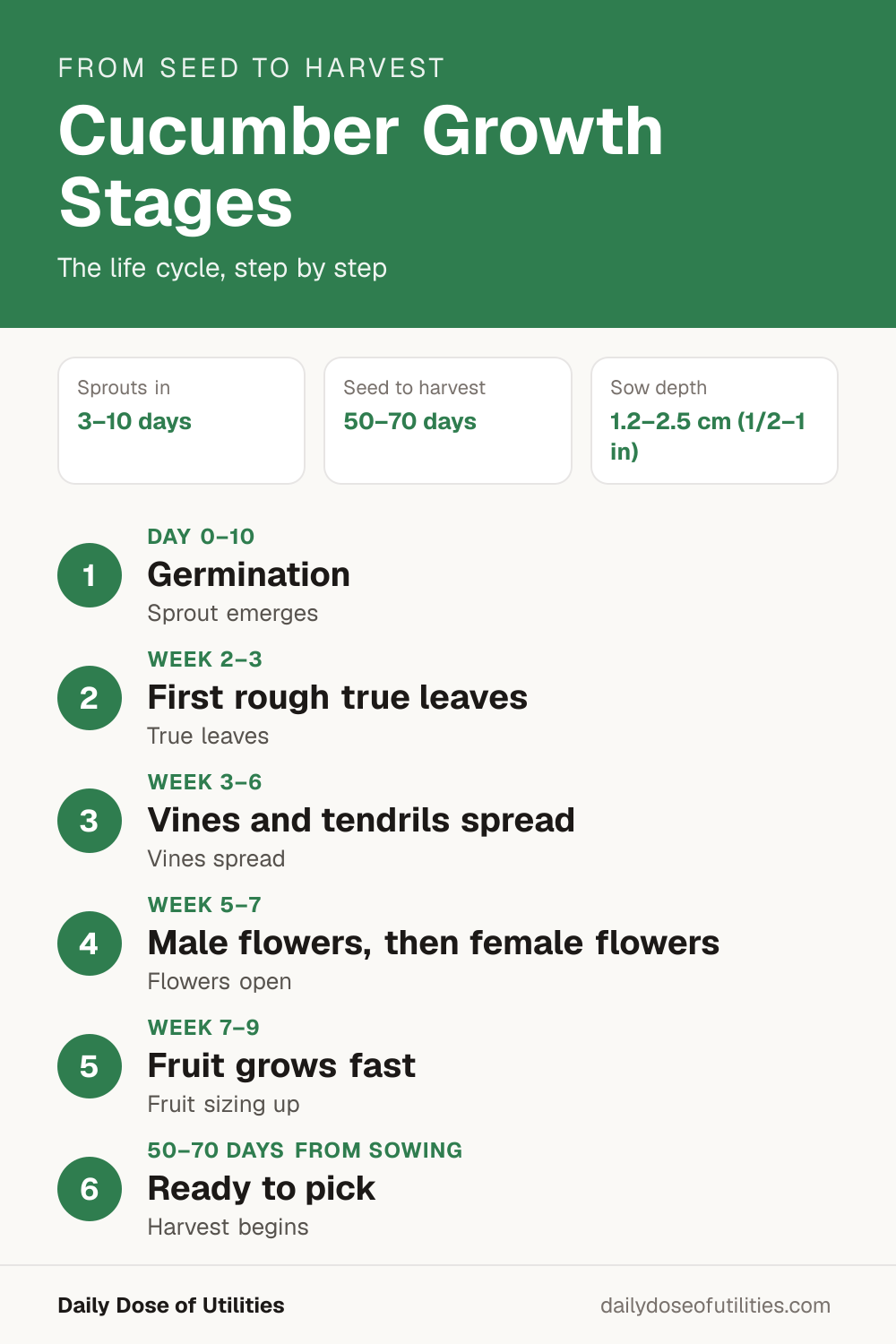
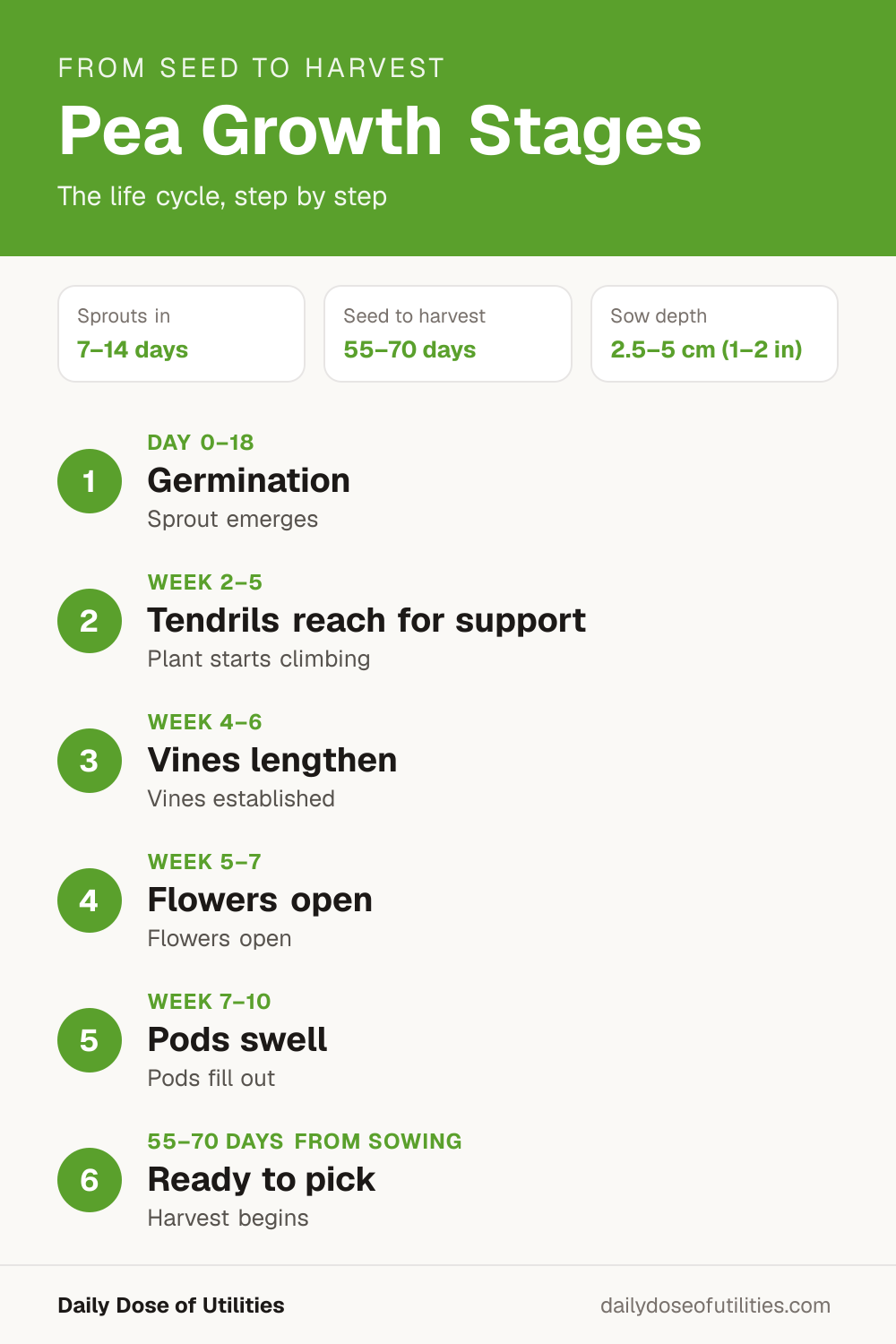
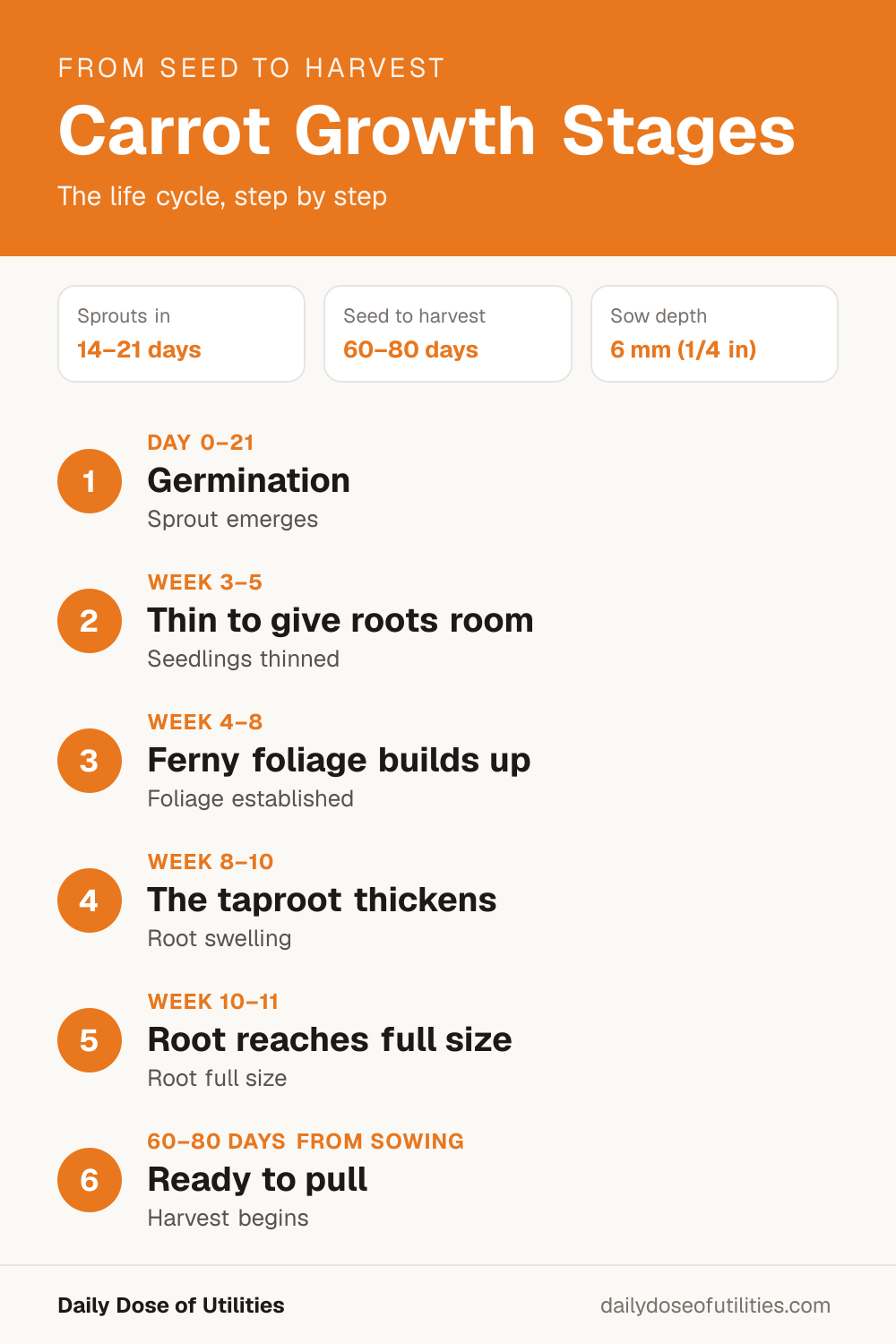
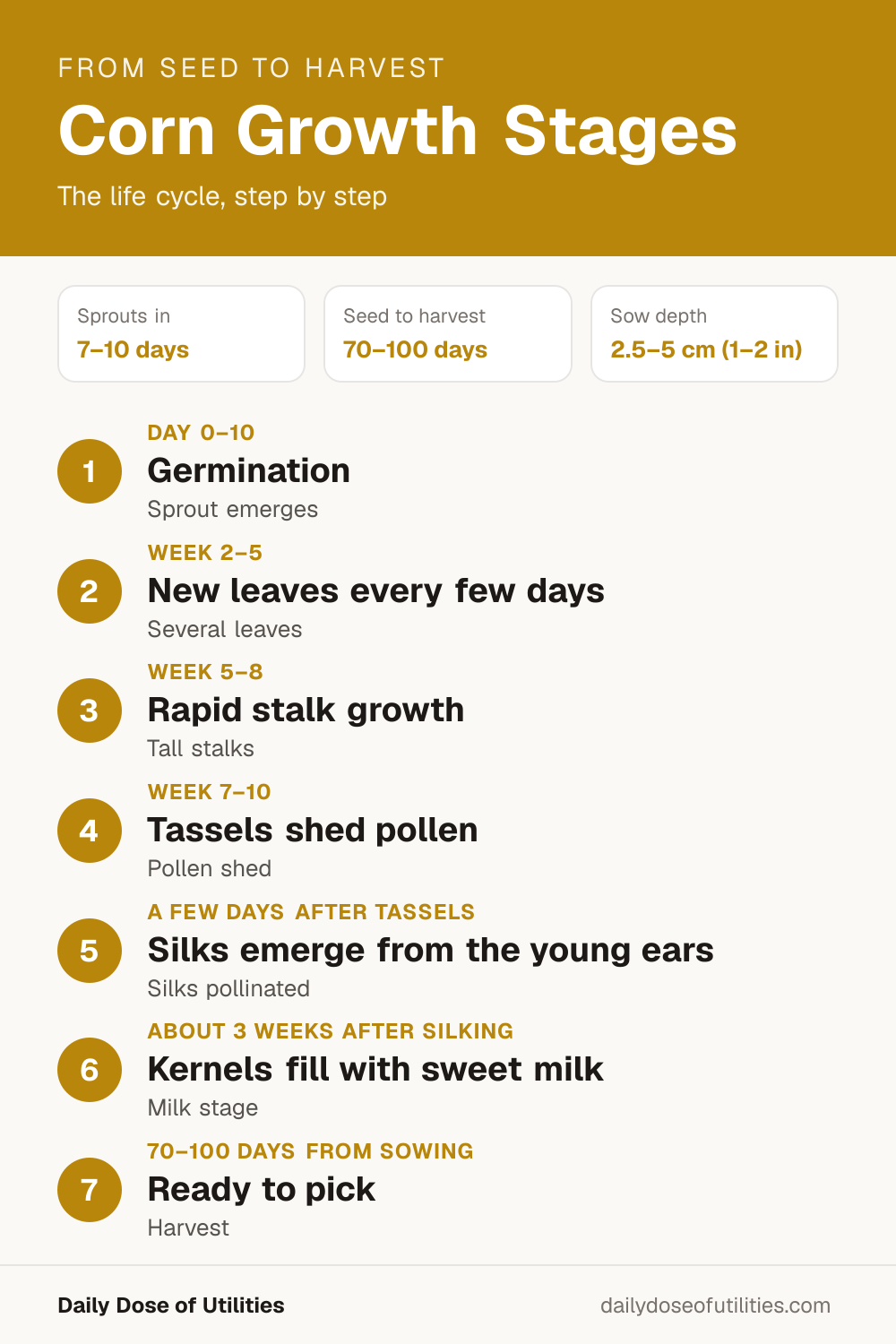
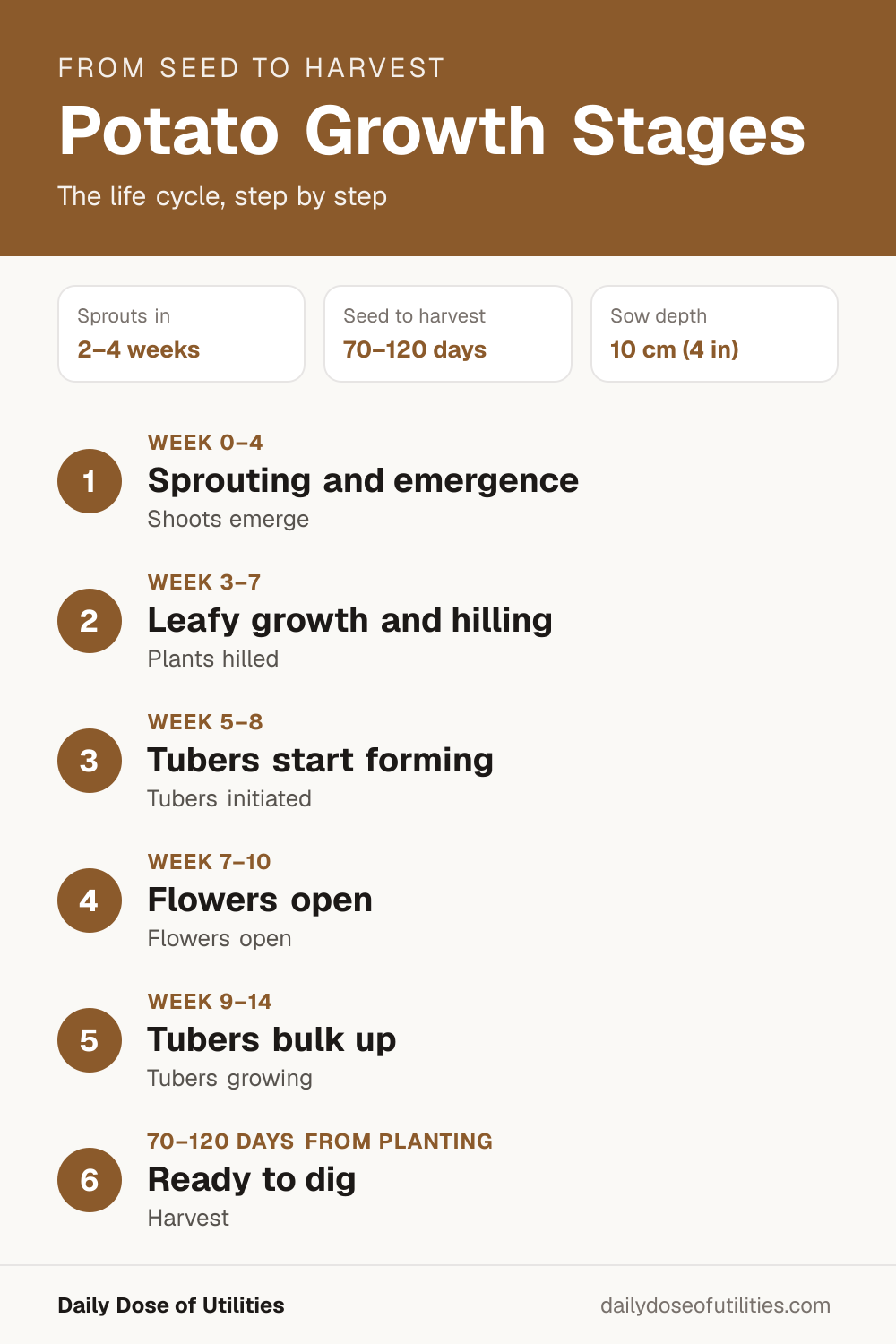
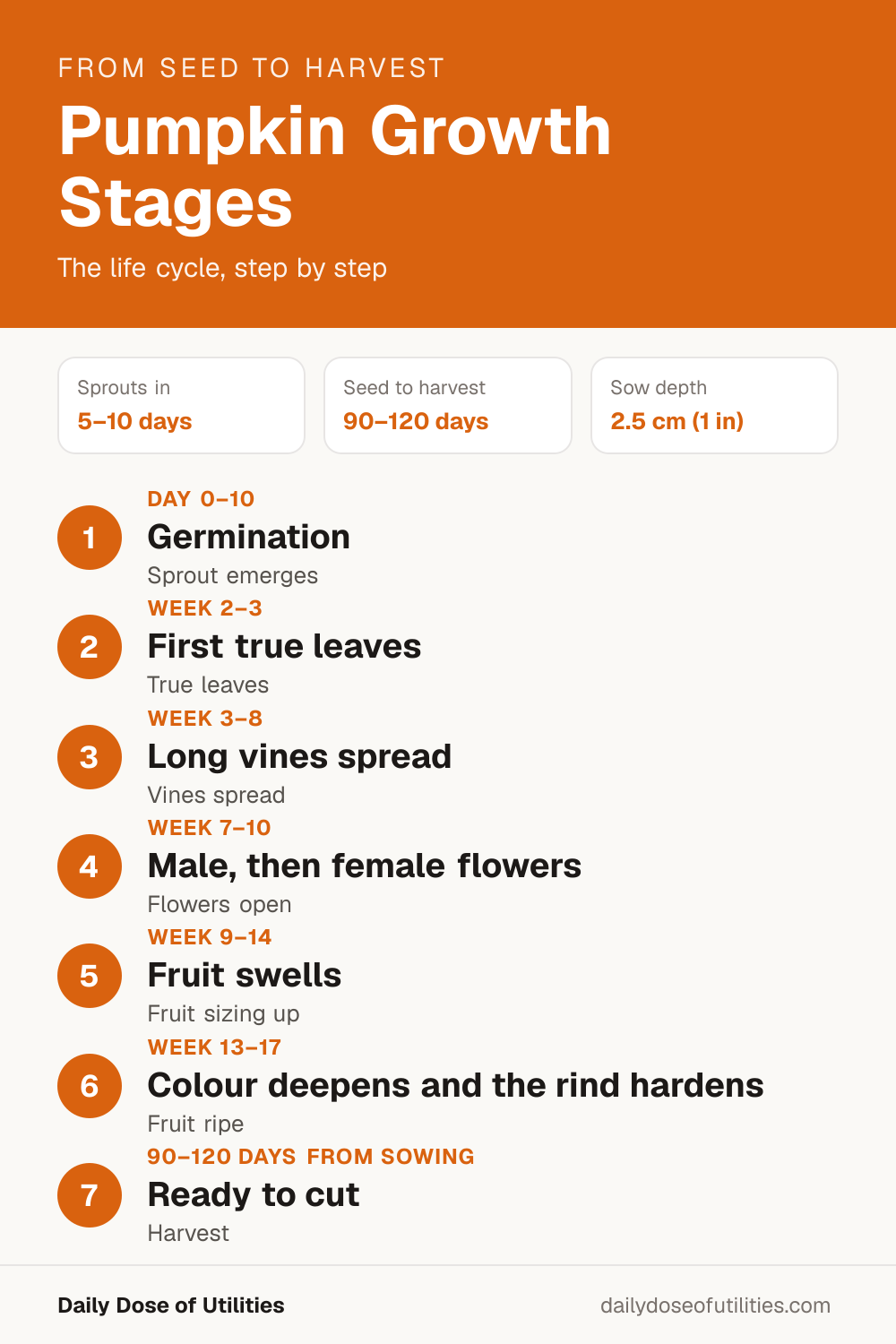
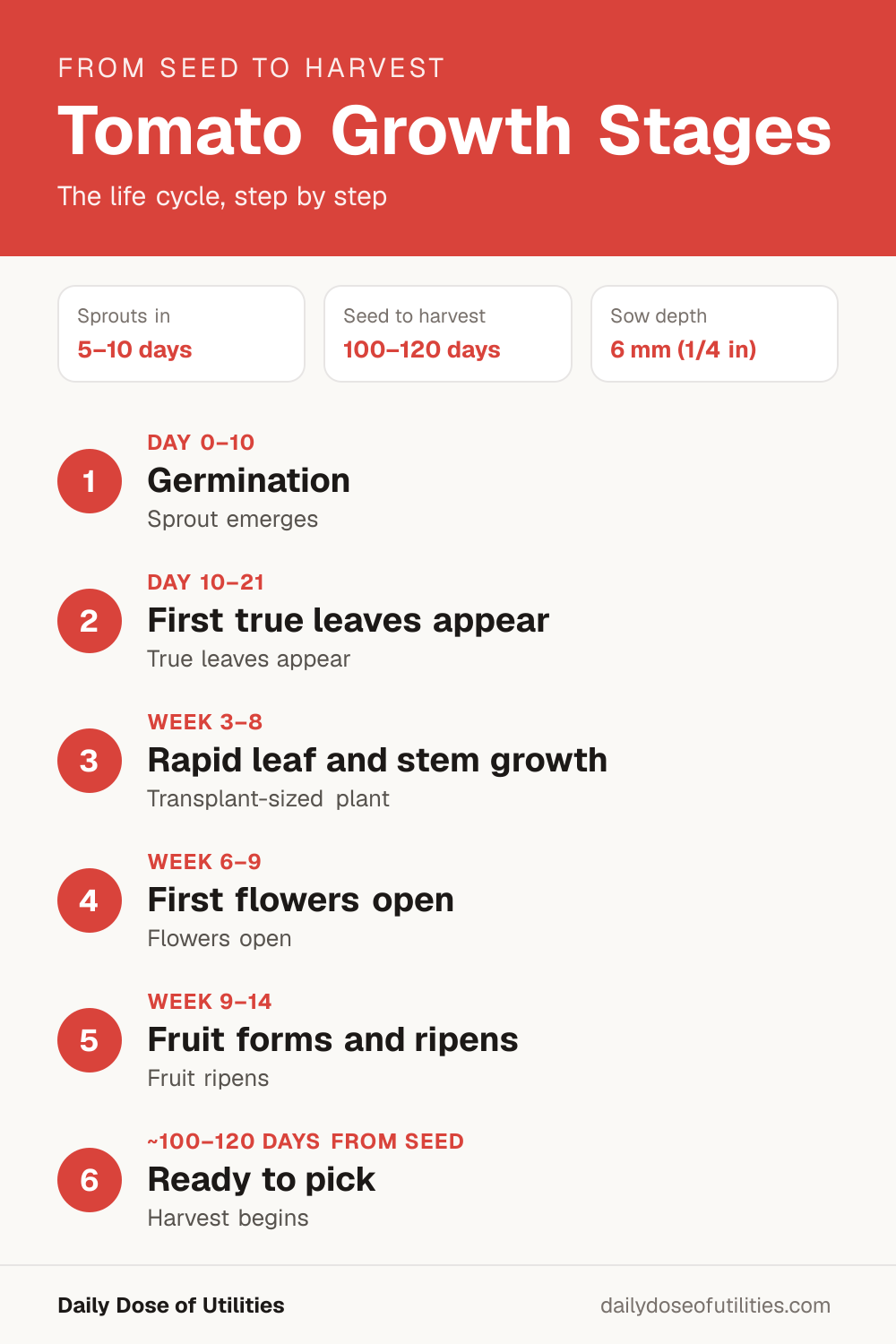
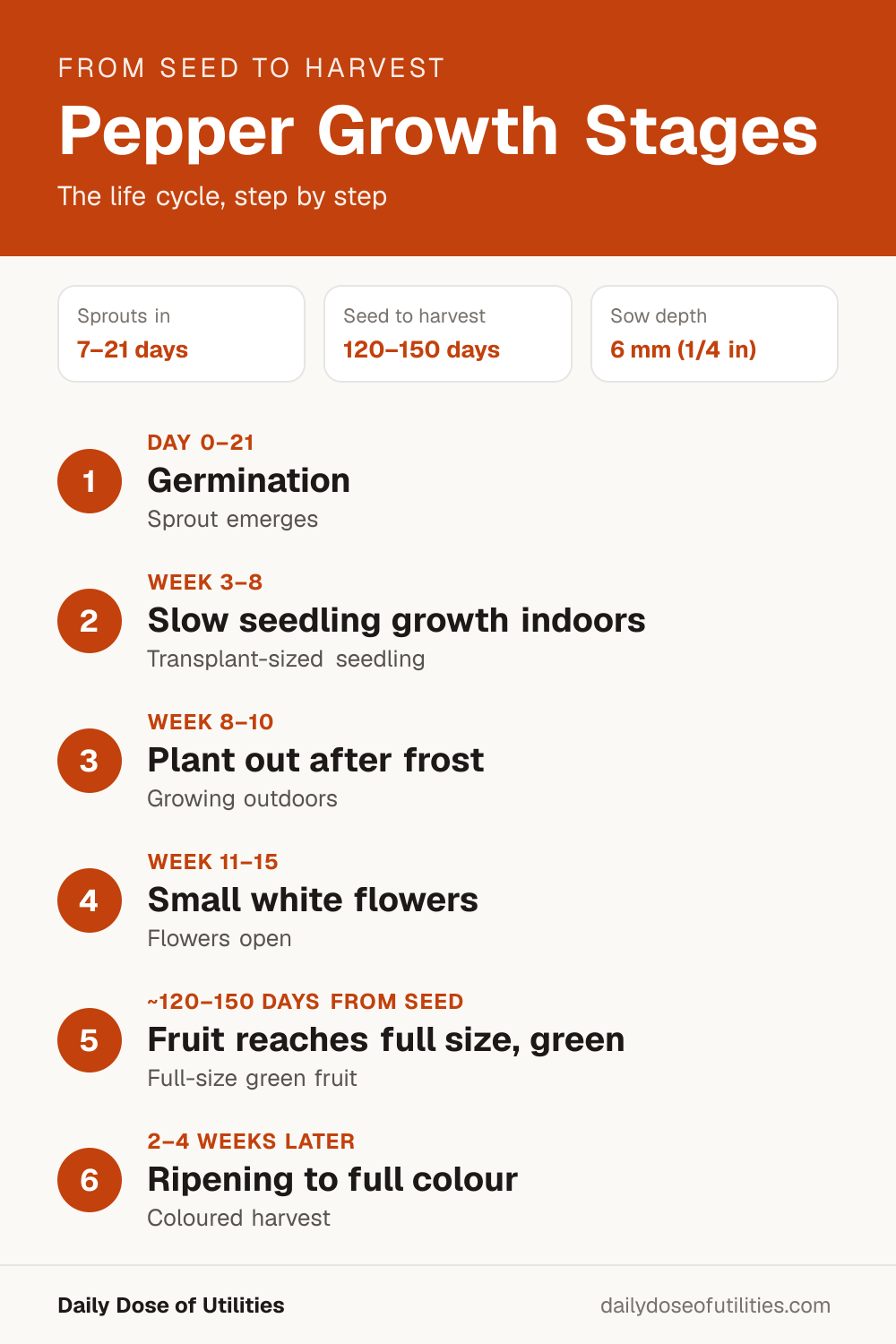
The growth stages every vegetable goes through
Every vegetable here follows the same basic life cycle. It starts with germination, when the seed absorbs water and sends out a root and shoot. Next comes the seedling stage, when the first true leaves appear, then vegetative growth, when the plant builds up leaves, stems and roots. After that a plant flowers, sets fruit or seed, and — if it isn't harvested first — completes its life cycle by producing the seed for the next generation.
Where along that cycle we harvest is what makes each crop different. Radishes, carrots and lettuce are picked during vegetative growth, for their roots or leaves, before they ever flower, and potatoes for the swollen underground stems (tubers) they store food in. Beans, peas, corn, cucumbers, zucchini, pumpkins, tomatoes and peppers have to go further, flowering and being pollinated before the part we eat even starts to form.
Why some vegetables are so much faster than others
Crops harvested for leaves or roots skip the slow flowering and fruiting stages, which is why radishes and baby lettuce can be ready within a month. Fruiting crops need time to build enough leaf area to support flowers and fruit, and then more time for the fruit itself to grow and ripen.
Temperature matters just as much. Cool-season crops — peas, lettuce, radishes, carrots — grow in spring and autumn and stall or bolt in summer heat. Warm-season crops — beans, corn, cucumbers, zucchini, pumpkins, tomatoes, peppers — barely grow in cold soil, so tomatoes and peppers are started indoors weeks before the last frost to fit their long season in.
How to read the times in the chart
The sprouting times assume soil at a comfortable temperature for that crop; cold soil can double them. Seed-to-harvest times are typical ranges and vary with variety, weather and day length, so treat a seed packet's "days to maturity" as the figure for your exact variety.
For crops usually transplanted, like tomatoes and peppers, seed packets normally count days to maturity from transplanting, not from sowing — the chart counts from seed, so it includes the 6–10 weeks those seedlings spend indoors first.
Frequently asked questions
- What is the fastest vegetable to grow?
- Radishes: they sprout in 3–5 days and are ready to pull in about 21–30 days. Baby lettuce leaves are a close second at around 25–30 days.
- Which vegetables take the longest to grow?
- Of these, peppers (about 120–150 days from seed) and tomatoes (about 100–120 days from seed), mostly because they're started indoors and must flower and ripen fruit before harvest.
- What are the stages of plant growth?
- Seed, germination, seedling, vegetative growth, flowering, fruit or seed development, and harvest — after which, if left to finish, the plant produces seed and the cycle begins again.
- What does "days to maturity" mean on a seed packet?
- The typical time from sowing to first harvest for crops sown directly in the garden, or from transplanting for crops usually started indoors, such as tomatoes and peppers.
- Are vegetables annuals or biennials?
- Most garden vegetables, including all the fruiting crops here, are annuals that complete their life cycle in one season. Carrots are biennials, flowering in their second year, and peppers are perennials in frost-free climates — but all are grown as annual crops.