Pepper Growth Stages and Life Cycle, From Seed to Harvest
Pepper growth stages: the seed sprouts in 7–21 days in warm soil, seedlings grow indoors for 8–10 weeks, flowers open a few weeks after transplanting, green fruit is ready 60–90 days after transplanting (about 120–150 days from seed), and full colour takes another 2–4 weeks.
Seed to sprout: germination
How a pepper seed transforms into a visible sprout.
Germination timeline
- 1
Sow indoors, early
Day 0
Sow 6 mm (¼ in) deep indoors 8–10 weeks before the last frost — peppers are slow from the start. They germinate best in warm soil, around 27–32°C (80–90°F), so a seedling heat mat makes a real difference.
→ Seed in warm mix
Read the steps as text
- Sow indoors, early. Day 0 Sow 6 mm (¼ in) deep indoors 8–10 weeks before the last frost — peppers are slow from the start. They germinate best in warm soil, around 27–32°C (80–90°F), so a seedling heat mat makes a real difference.
- The seed slowly takes up water. Day 1–3 The flat, pale seed absorbs water and swells. Below about 21°C (70°F) everything slows down, and germination can stretch to three weeks or more.
- A looped stem emerges. Day 7–14 A thin, looped stem pushes through the surface, pulling the seed leaves up behind it. Hot-pepper varieties are often slower than sweet peppers.
- Seed leaves unfold. Day 10–21 Two long, narrow seed leaves open. Move seedlings into strong light straight away so they grow sturdy instead of tall and weak.
Seed to harvest: full life cycle
Every stage of a pepper plant's life, from sowing to picking. It's drawn as a loop, the way a life cycle conventionally is — left to flower and go to seed instead of being harvested, a plant produces the seed for next year's crop.
Full life cycle timeline
- 1
Germination
Day 0–21
Slow and warmth-hungry — see the timeline above.
→ Sprout emerges
Read the steps as text
- Germination. Day 0–21 Slow and warmth-hungry — see the timeline above.
- Slow seedling growth indoors. Week 3–8 True leaves follow slowly. Pot seedlings on as they grow and keep them warm and in bright light for the 6–8 weeks before transplanting.
- Plant out after frost. Week 8–10 Harden seedlings off and plant out once nights stay above about 13°C (55°F) — a week or two after tomatoes in most areas. Cold soil stunts peppers for weeks.
- Small white flowers. Week 11–15 Small white, star-shaped flowers open where the stems branch. Peppers pollinate themselves, but flowers drop without setting fruit when nights fall below about 15°C (60°F) or days climb above about 32°C (90°F).
- Fruit reaches full size, green. ~120–150 days from seed Fruit grows to full size while still green — and green peppers are edible and ready to pick at this stage, typically 60–90 days after transplanting (about 120–150 days from seed).
- Ripening to full colour. 2–4 weeks later Left on the plant for another 2–4 weeks, fruit ripens to red, yellow, orange or purple, growing sweeter (and, in hot peppers, often hotter). Cut fruit off with scissors — the brittle branches snap easily.
Pepper growth stages infographic
Every stage on one page — free to save, print for the garden shed or classroom, or pin.
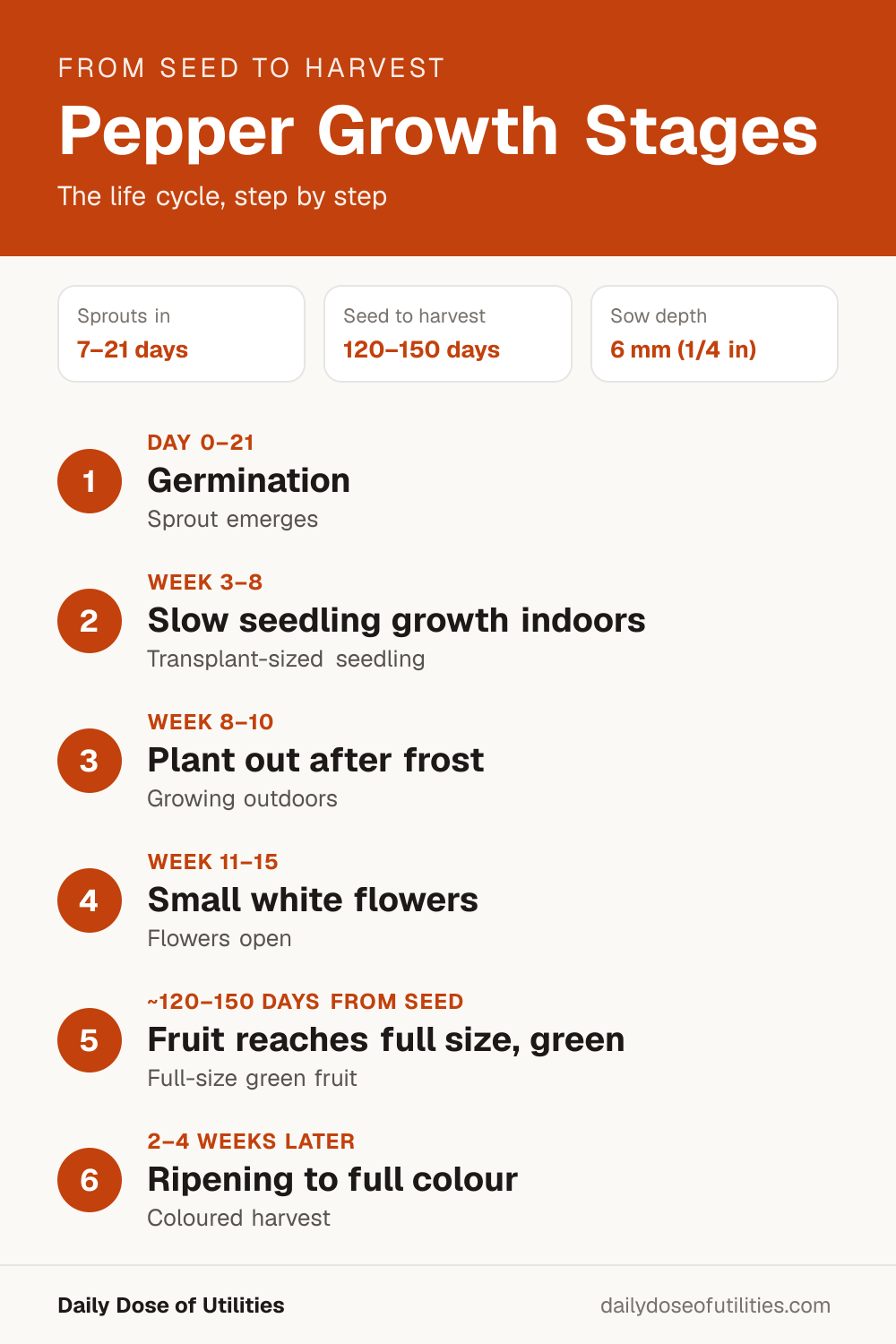
Pepper plant growth stages at a glance
Germination (days 0–21): slow and warmth-hungry — best at 27–32°C (80–90°F) soil.
Seedling (weeks 3–8): grown indoors in bright light until it's large enough to plant out.
Transplant (weeks 8–10): planted outside once nights stay above about 13°C (55°F).
Flowering (weeks 11–15): small white flowers open where branches fork.
Green fruit (about 120–150 days from seed, 60–90 days after transplanting): fruit reaches full size while still green — already edible.
Full colour (2–4 weeks later): fruit ripens to red, yellow, orange or purple and turns sweeter.
Why peppers are slow — and how to speed them up
Peppers come from warm climates, and every stage runs on heat. Seed in cool soil can take three weeks or more to sprout, which is why they're started indoors 8–10 weeks before the last frost, ideally on a heat mat.
After transplanting, cold soil and cool nights can stall growth for weeks. Waiting until the soil has warmed, using black plastic or mulch to hold heat, and planting a week or two after tomatoes usually gets peppers growing faster overall.
Green vs red peppers, and the full life cycle
A green pepper and a red pepper can come from the same plant: green is simply the unripe stage. Left on the plant, the fruit changes colour over 2–4 weeks as it ripens, becoming sweeter and richer in vitamins — the reason coloured peppers cost more.
Peppers are perennials in frost-free climates but are grown as annuals elsewhere. A fully ripe pepper contains mature seeds ready for next year's sowing, completing the cycle — though seed from F1 hybrids, and from different peppers grown close together, may not grow true.
Frequently asked questions
- How long do pepper seeds take to germinate?
- About 7–21 days. They're fastest in soil at 27–32°C (80–90°F); below about 21°C (70°F) germination slows down a lot, and hot peppers are often slower than sweet ones.
- How long do peppers take to grow from seed?
- About 60–90 days after transplanting for green fruit — roughly 120–150 days from seed, including 8–10 weeks indoors as seedlings — plus another 2–4 weeks for fully coloured fruit.
- Why are my pepper flowers falling off?
- Usually temperature: flowers drop when nights fall below about 15°C (60°F) or days rise above about 32°C (90°F). Uneven watering can cause it too. Fruit sets again when the weather evens out.
- Are green peppers just unripe red peppers?
- Usually, yes. Most bell peppers start green and ripen to red, yellow or orange if left on the plant for another 2–4 weeks.
- When should I start pepper seeds indoors?
- About 8–10 weeks before your last frost date. Use the frost date calculator to find yours.