Strawberry Growth Stages and Life Cycle, From Seed to Harvest
Strawberry growth stages: seeds sprout in 1–6 weeks, the plant forms a leafy crown, sends out runners in summer, rests through winter, flowers in spring and ripens berries about 30 days after flowering — 4–12 months from seed, then cropping for about 3–4 years.
Seed to sprout: germination
How a strawberry seed transforms into a visible sprout.
Germination timeline
- 1
Sow on the surface
Day 0
Most strawberries are grown from bought plants or runners, but they can be grown from seed, started indoors in late winter. The tiny seeds need light to germinate, so press them onto moist seed compost without covering them. Many gardeners chill the seed in the fridge for 2–4 weeks first, which helps more of them sprout.
→ Seed on the surface
Read the steps as text
- Sow on the surface. Day 0 Most strawberries are grown from bought plants or runners, but they can be grown from seed, started indoors in late winter. The tiny seeds need light to germinate, so press them onto moist seed compost without covering them. Many gardeners chill the seed in the fridge for 2–4 weeks first, which helps more of them sprout.
- The seed slowly takes up water. Week 1 The hard little seeds absorb water slowly. Keep the surface constantly moist (a clear lid helps) at about 18–24°C (65–75°F).
- Sprouts appear, unevenly. Week 1–4 Seedlings appear over several weeks rather than all at once — patience is normal with strawberry seed.
- Tiny seed leaves unfold. Week 2–6 Two tiny, rounded seed leaves open; the first true leaves, with the familiar three toothed leaflets, follow a few weeks later.
Seed to harvest: full life cycle
Every stage of a strawberry plant's life, from sowing to picking. It's drawn as a loop, the way a life cycle conventionally is — left to flower and go to seed instead of being harvested, a plant produces the seed for next year's crop.
Full life cycle timeline
- 1
Germination
Week 0–6
Slow and uneven from seed — see the timeline above.
→ Sprout emerges
Read the steps as text
- Germination. Week 0–6 Slow and uneven from seed — see the timeline above.
- A leafy crown forms. Month 2–3 Leaves with three toothed leaflets grow from a short central stem called the crown. Plant out after the last frost with the crown exactly at soil level — buried crowns rot and exposed ones dry out.
- Runners and new plants. First summer In summer, plants send out runners — long stems that root at their tips and form new daughter plants. Pin them down to make new plants, or snip them off so the mother plant puts its energy into fruit.
- Winter dormancy. Winter Strawberries are perennials. Short, cold days send them into dormancy, and the chilling helps June-bearing types flower well the following spring. A loose straw mulch protects crowns in hard frosts.
- White flowers open. Spring Clusters of white, five-petalled flowers open. Bees help pollinate them: well-pollinated flowers become large, evenly shaped berries, and poorly pollinated ones become small or lumpy.
- Berries swell and ripen. About 30 days after flowering Each flower's base swells into a berry — white at first, then red as it ripens. The "seeds" on the outside are actually the plant's true fruits (achenes), each holding one seed.
- Ready to pick. 4–12 months from seed Pick when fully red, with the green cap attached, every couple of days. Seed-grown everbearing and day-neutral types can fruit in their first summer; June-bearers usually wait until their second year. Plants crop well for about 3–4 years.
Strawberry growth stages infographic
Every stage on one page — free to save, print for the garden shed or classroom, or pin.
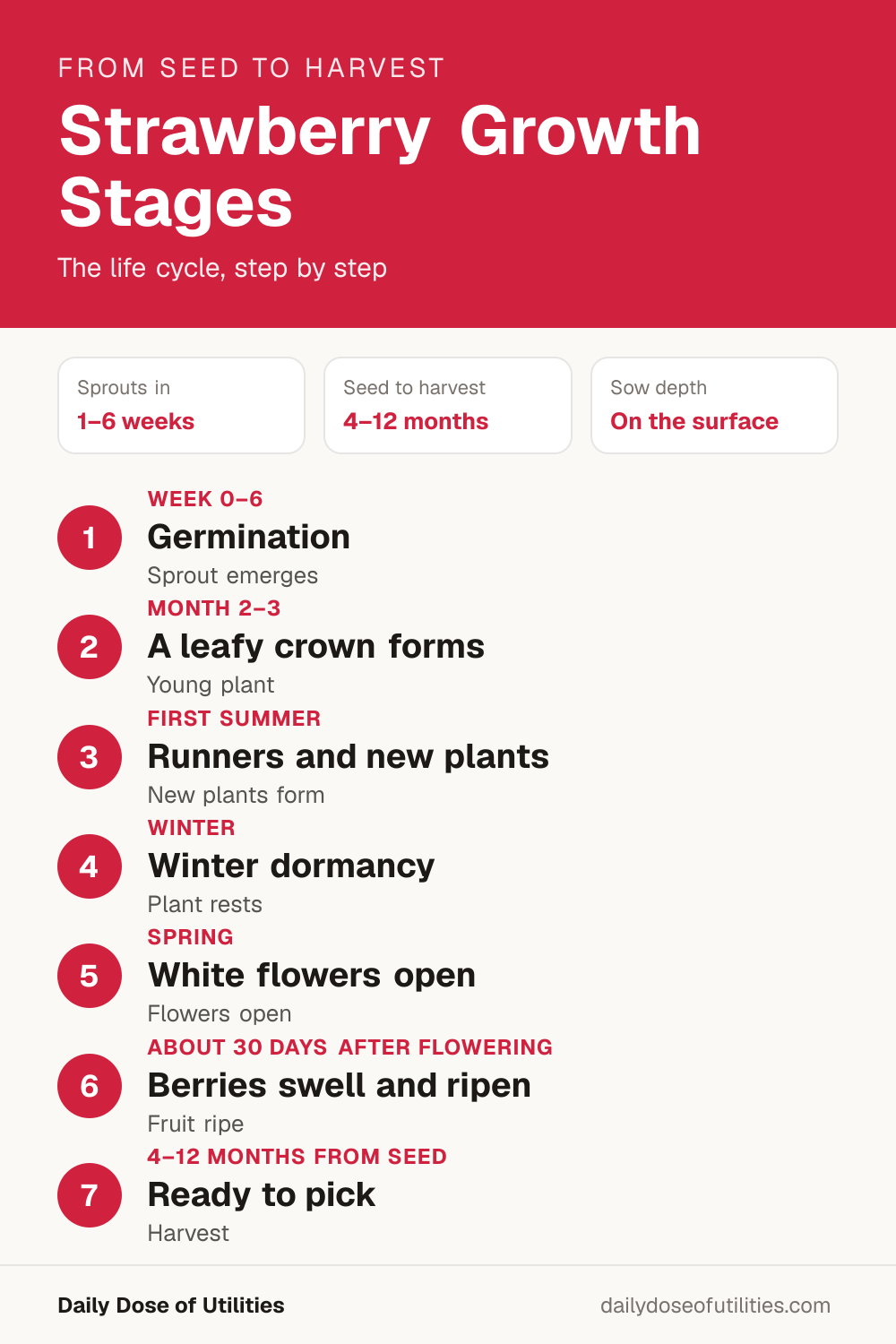
The strawberry life cycle at a glance
Germination (weeks 0–6): tiny seeds sown on the surface sprout slowly and unevenly.
Leafy crown (months 2–3): leaves with three toothed leaflets grow from a short stem called the crown.
Runners (first summer): long stems root at their tips and form new daughter plants.
Winter rest: the plant goes dormant, and the cold helps it flower the next spring.
Flowering (spring): white five-petalled flowers open and are pollinated by bees.
Fruit and harvest (about 30 days after flowering): berries swell, turn from white to red and are ready to pick.
Seeds, runners and crowns: three ways to start
Most gardeners start with bought plants or bare-root crowns in spring, which fruit the same year or the next. Runners from an existing plant are the easiest free option — each one is a clone of its parent.
Growing from seed is slower but cheap and fun, especially for alpine strawberries, which come true from seed. Seed from a hybrid garden strawberry grows into plants that differ from the parent, which is why named varieties are sold as plants.
June-bearing, everbearing and day-neutral
June-bearing strawberries produce one big crop over two or three weeks in early summer. Everbearing types give a crop in early summer and another in late summer, and day-neutral types flower and fruit on and off from early summer until autumn.
Strawberries are perennials, but plants crop best for about 3–4 years. Rooting runners every year or two keeps a bed producing as older plants are replaced.
Frequently asked questions
- How long do strawberry seeds take to germinate?
- Anywhere from 1 to 6 weeks, and not all at once. Sow on the surface (they need light), keep them moist at about 18–24°C (65–75°F), and chill the seed for 2–4 weeks first for better germination.
- How long does it take to grow strawberries from seed?
- About 4–12 months to the first berries. Everbearing, day-neutral and alpine types sown in late winter can fruit in their first summer; June-bearers usually fruit in their second year.
- How long after flowering do strawberries ripen?
- About 30 days, depending on temperature — the berry starts white and green, then turns red over the last week or so.
- Should I cut off strawberry runners?
- Snip them if you want bigger berries, since runners take energy from fruiting. Keep and pin down a few if you want new plants to replace older ones.
- Are strawberry seeds on the outside?
- Yes — those little specks are achenes, each a tiny true fruit with one seed inside. The red flesh is the swollen base of the flower.